Cocina española y argentina
Jamón ibérico: por qué es único y cómo disfrutarlo en Panamá
Jamón ibérico en Panamá: qué lo hace único, diferencias entre bellota y cebo, cómo catarlo y dónde disfrutar sabores ibéricos en Casco Antiguo.
Publicado el 29 de mayo de 2026 · 4 min de lectura
Pocos productos despiertan tanta devoción como el jamón ibérico, la joya de la gastronomía española. Su sabor profundo, su textura que se funde en la boca y su proceso de curación artesanal lo convierten en una experiencia, no solo en un alimento. Si te preguntas por qué el jamón ibérico en Panamá genera tanta expectativa y cómo disfrutarlo como un experto, esta guía es para ti.
Qué hace único al cerdo ibérico
El secreto empieza en la raza. El cerdo ibérico es una raza autóctona de la península ibérica, capaz de infiltrar grasa dentro del músculo como casi ningún otro animal. Esa grasa entreverada —el famoso veteado— es la responsable de la jugosidad y del sabor que distingue al ibérico de cualquier otro jamón del mundo.
El segundo factor es el estilo de vida. Los cerdos ibéricos de mayor categoría se crían en libertad en la dehesa, un ecosistema de encinas y alcornoques del suroeste español. Durante la montanera, la temporada de otoño e invierno, se alimentan de bellotas, y ese festín natural impregna la grasa de aromas a frutos secos que ningún proceso industrial puede imitar.
Bellota, cebo de campo, cebo: entender las etiquetas
No todo el jamón ibérico es igual, y España lo regula con un sistema de precintos de colores que conviene conocer:
- Etiqueta negra — 100% ibérico de bellota: cerdos de raza ibérica pura, criados en libertad y alimentados con bellotas. Es la cumbre: el auténtico pata negra.
- Etiqueta roja — ibérico de bellota: alimentados con bellotas en la dehesa, con un porcentaje de raza ibérica que puede ser del 50% o 75%.
- Etiqueta verde — cebo de campo: criados en el campo con pastos y piensos.
- Etiqueta blanca — cebo: alimentados con piensos en granja.
A esto se suma el tiempo: un jamón ibérico de bellota puede curarse entre 36 y 48 meses en secaderos y bodegas naturales. Ese reposo lento es el que desarrolla los más de cien compuestos aromáticos que los catadores identifican en un buen ibérico.
Cómo catar jamón ibérico como un experto
Disfrutar el ibérico tiene su técnica, y aplicarla multiplica el placer:
- Temperatura: la loncha debe servirse a temperatura ambiente, cuando la grasa comienza a brillar. Nunca fría de nevera.
- Corte: siempre a cuchillo, en lonchas finas y pequeñas que incluyan magro y grasa.
- En la boca: deja que la loncha repose unos segundos sobre la lengua. La grasa se funde a la temperatura corporal y libera los aromas.
- Acompañamiento: pan con buen aceite de oliva y una copa de vino. Un fino, un cava o un tinto elegante de Rioja son aliados clásicos.
Un consejo de oro: el jamón ibérico se come solo o casi solo. Los grandes acompañamientos son los que no compiten con él.
Sabores ibéricos en el Casco Antiguo
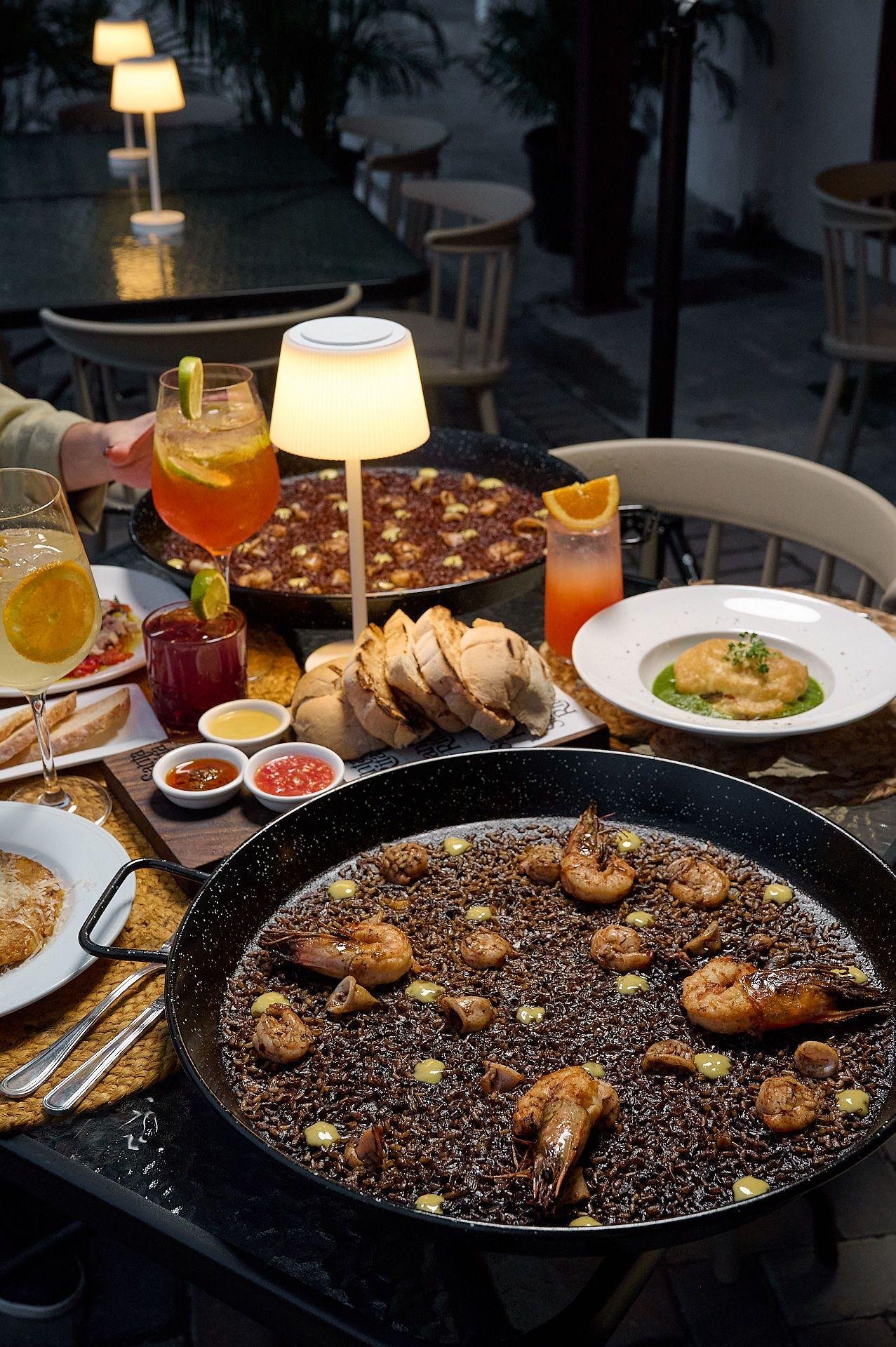
En la Ciudad de Panamá, la cocina española vive un gran momento, y el Casco Antiguo es su epicentro. En Restaurante Santa Rita, casa de gastronomía española y argentina con 4.7 estrellas en Google, el universo ibérico se cuela en la carta de formas deliciosas: su tortilla de chorizo ibérico ($14) es el ejemplo perfecto de cómo un embutido ibérico transforma un clásico popular en algo memorable.
La experiencia se completa con entradas como las croquetas de berenjena y tomate seco ($9.50) o el calamar con judías del mar ($15), y con una cava de vinos españoles —Rioja, Ribera del Duero, Albariño, cava— que parece diseñada para acompañar sabores curados e intensos. Puedes explorar la propuesta completa en nuestra página de Santa Rita o revisar el menú digital antes de tu visita.
El maridaje panameño
Lo fascinante de disfrutar productos ibéricos en Panamá es el contraste con el producto local. Después de una noche de sabores españoles, vale la pena conocer el otro lado de la moneda: Aya la Vida, restaurante hermano de Santa Rita en el mismo Casco Antiguo, celebra la cocina panameña contemporánea con ingredientes 100% nacionales, música en vivo y terraza. Dos filosofías, un mismo barrio.
Preguntas frecuentes sobre el jamón ibérico
¿Jamón serrano y jamón ibérico son lo mismo? No. El serrano proviene de cerdo blanco y se cura menos tiempo; el ibérico proviene de la raza ibérica y alcanza curaciones mucho más largas, con un sabor y una textura incomparables.
¿Por qué es tan costoso? Por la genética, la crianza en libertad, la alimentación con bellota y hasta cuatro años de curación. Cada pieza es el resultado de un proceso artesanal que no admite atajos.
¿Cómo se conserva una vez cortado? Cubierto con su propia grasa o un paño de algodón, en lugar fresco y seco. Y la regla más importante: consumirlo pronto, porque el jamón cortado no espera.
Reserva tu experiencia ibérica en Panamá
El sabor de España te espera en las calles empedradas del Casco Antiguo. Reserva en línea en Restaurante Santa Rita o escribe por WhatsApp al +507 6629-6315 para asegurar tu mesa. Si planeas una cata con amigos o una cena especial de empresa, nuestro equipo de eventos y grupos puede armar una velada ibérica a tu medida. ¿Dudas? Contáctanos y te ayudamos a planear tu visita.