Panamanian cuisine
Panamanian Ceviche: History, Secrets, and Where to Try the Best
The history and secrets of Panamanian ceviche: where it comes from, how it is made with corvina and ají chombo, and where to try the best ceviche in Panama.
Published on June 4, 2026 · 4 min read
Panamanian ceviche is much more than fish marinated in lime: it is how a country with two oceans celebrates its sea. Fresh, bright and spiked with ají chombo pepper, this dish is equally at home on an afternoon at the Seafood Market and at a white-tablecloth dinner in Casco Viejo. Here is its history, its preparation secrets, and where to try the best ceviche in Panama today.
A dish with centuries of travel behind it
Ceviche was not born in Panama, but it found a natural home here. Food historians trace its origins to the South American Pacific, where pre-Columbian cultures were already curing fish with acidic juices and chili peppers long before European citrus arrived. The conquest brought lime and onion, and the recipe traveled up the Pacific coast until it settled into every port of the isthmus.
In Panama — a meeting point of fleets, fairs and migrations — ceviche became the food of harbors and celebrations. The local version stands out for three traits: the starring role of corvina, a white fish with firm flesh and delicate flavor; a longer marinade than its southern neighbors use, leaving the fish fully "cooked" in the acid; and the near-mandatory presence of ají chombo, Panama's cousin of the habanero, which adds an unmistakable aromatic heat.
The secrets of a great Panamanian ceviche
What separates a memorable ceviche from an ordinary one? Panamanian cooks agree on a few basic principles:
- Fish of the day: the corvina must be impeccably fresh; lime should enhance, never disguise.
- Even cuts: small, uniform cubes so the marinade penetrates equally.
- Slivered red onion: it brings sweetness, crunch and color.
- Culantro, not cilantro: the long-leafed creole herb delivers the perfume that defines the Panamanian flavor.
- Absolute cold: ceviche is served ice-cold, ideally with soda crackers or patacones on the side.
On top of that base, every kitchen guards its secret ratio of lime, its exact salt point, and its precise dose of ají chombo. It is a dish that looks simple and demands precision: there is nowhere to hide a mistake.
And although corvina is queen, the Panamanian repertoire goes much further: there is shrimp ceviche, octopus ceviche, black-clam ceviche and even mixed versions that combine the best of the day's catch. At family celebrations, ceviche usually opens the table in big trays; in the restaurants of Casco Viejo, it becomes the first chapter of a dinner full of promise.
Tiger's milk reaches the isthmus
In recent years, the craft of ceviche has grown more sophisticated. Leche de tigre — the marinade juice, boosted with fish, chili and aromatics — went from a counter-side secret to the star of the show. Contemporary Panamanian cuisine has made it its own with ingredients from the land: coconut, tropical fruit and native peppers.
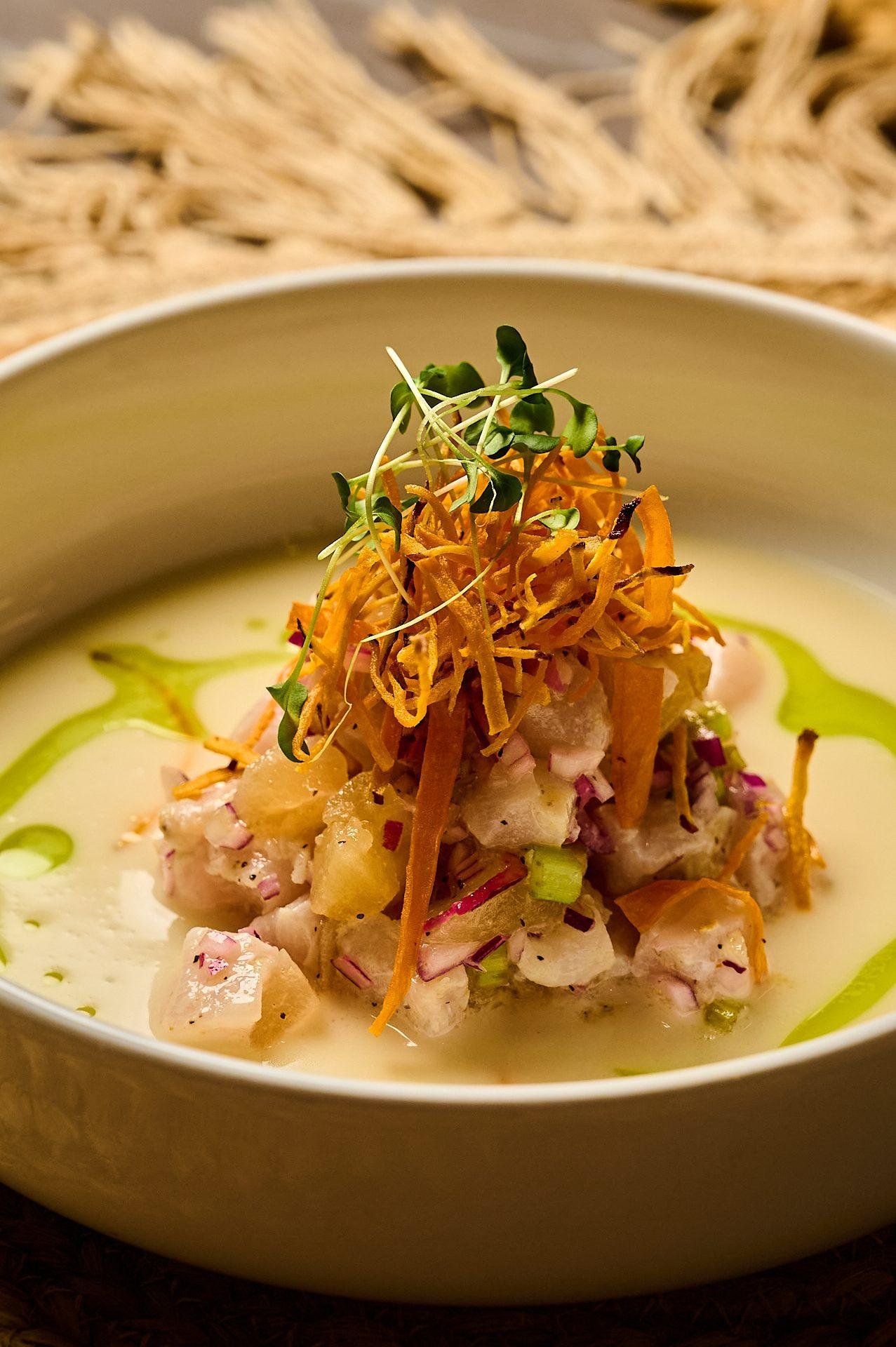
The best example is in Casco Antiguo. At Aya la Vida, a contemporary Panamanian restaurant working with 100% national ingredients under the philosophy "De la Tierra a tu Mesa" (From the Land to Your Table), the Ceviche de corvina al estilo Aya la Vida ($17.50) is marinated in a coconut tiger's milk and finished with candied apple: Caribbean creaminess, precise acidity and a sweet counterpoint that surprises without betraying tradition.
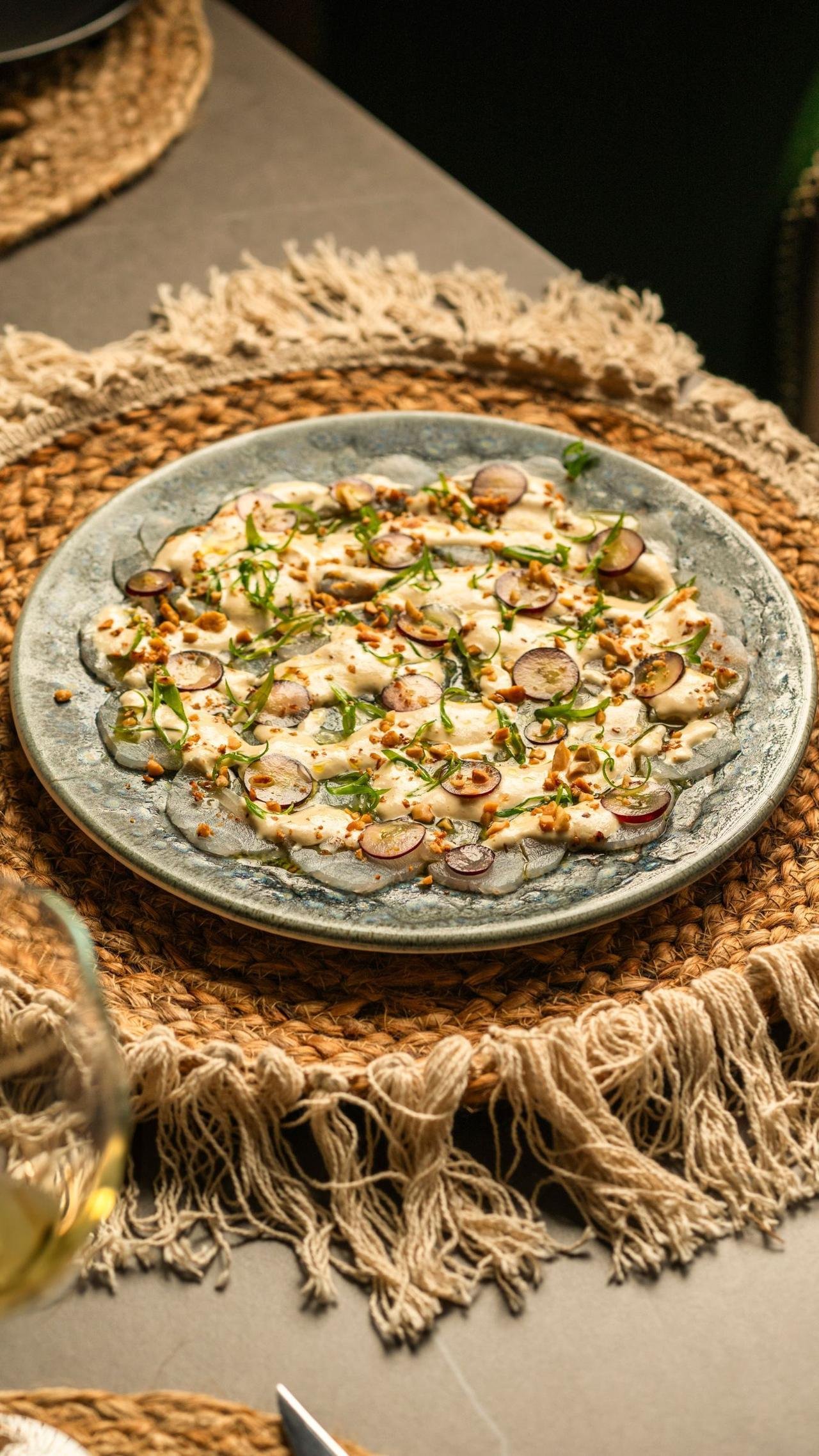
For raw-fish lovers there is one more step on the same menu: the Tiradito de atún ($18.30), slices of tuna with Panamanian ponzu and pixvae (peach palm fruit), a fruit so distinctly ours that hardly anyone outside the isthmus knows it. Two dishes, two techniques, one message: the Panamanian sea can speak a contemporary language without losing its accent.
Where to try the best ceviche in Panama
The classic ceviche trail starts at the Seafood Market on the Cinta Costera, where ceviche is served in little cups and eaten standing up, watching the boats. But if you are after the complete experience — national product, chef-level technique and a setting steeped in history — Casco Viejo is the essential stop.
Aya la Vida adds a terrace, live music and folklore nights to its kitchen, with a pet-friendly atmosphere and vegetarian and gluten-free options so no one is left out of the table. Learn more about the restaurant on our Aya la Vida page and browse available dishes on the digital menu.
And since in Casco Viejo the oceans share the neighborhood with the Spanish Atlantic, just steps away you will find Restaurante Santa Rita, where Spanish and Argentine gastronomy — signature tapas, jamón ibérico, grilled cuts — makes the perfect counterpoint for a second night in the district.
Reserve a table facing history
The best Panamanian ceviche is enjoyed fresh, ice-cold and unhurried, with the bells of Casco Viejo in the background. Book your table at Aya la Vida via WhatsApp at +507 6588-4855, or write to us through our contact page and we will help you plan your visit. Panama's sea is waiting for you on a plate.