Panamanian cuisine
Chicharrón de Ocú: The Crispy Pride of Azuero
Chicharrón de Ocú is the crispy pride of Azuero, Panama: its history, how this beloved pork dish is made, and where to try a chef's version in Casco Viejo.
Published on May 13, 2026 · 4 min read
Few bites stir as much regional pride in Panama as chicharrón de Ocú. In this district of Herrera province, at the heart of the Azuero peninsula, frying pork is an art passed down through generations, and tasting it means understanding why Azuero's food is considered the cradle of Panamanian culinary tradition. Here is its history, its technique, and where to try a chef's version without leaving Panama City.
Azuero: Panama's folkloric pantry
The Azuero peninsula — Herrera, Los Santos and part of Veraguas — is far more than a geographic region: it is the cultural heart of the country. From here come the finest polleras (traditional dresses), the oldest tamborito rhythms, the most famous carnivals, and much of the repertoire we now call traditional Panamanian food. Country life, with its cattle, backyard pigs and corn, shaped a cuisine of wood fires, lard and patience.
Ocú, in central Herrera, is famous for its Festival del Manito, for its crafts and — for any traveler with a healthy appetite — for its chicharrón. Along the roads that cross the district, chicharronería stands are a mandatory stop: the aroma of pork frying in its own fat reaches you before the sign does.
What makes chicharrón de Ocú special?
Chicharrón exists all over Latin America, but Ocú's version has earned its own reputation within Panama. Its secret is balance: it is neither puffed skin alone nor just fried meat, but the sweet spot where both live together.
- The cut: pieces with skin, fat and meat, so every bite carries all three textures.
- Cooking in its own lard: the pork is slowly confited before the final blast of heat that makes it crackle.
- Salt and lime: simple seasoning that respects the flavor of farm-raised pork.
- The sides: yuca, plantain or corn tortilla, and almost always a touch of chili.
The result is a chicharrón that crunches on the outside, melts on the inside and tastes of the countryside. In Azuero it is eaten at any hour: at breakfast with hojaldre, mid-morning with grilled corn tortilla, or as the star of a festival lunch.
There is also a social ingredient that appears in no recipe: chicharrón is bought by the pound, shared from a paper cone and eaten standing up, mid-conversation. It is the food of town squares, pilgrimages and the ride home after the party, and that communal dimension explains much of its place in the Panamanian heart.
From the roadside stand to the chef's table
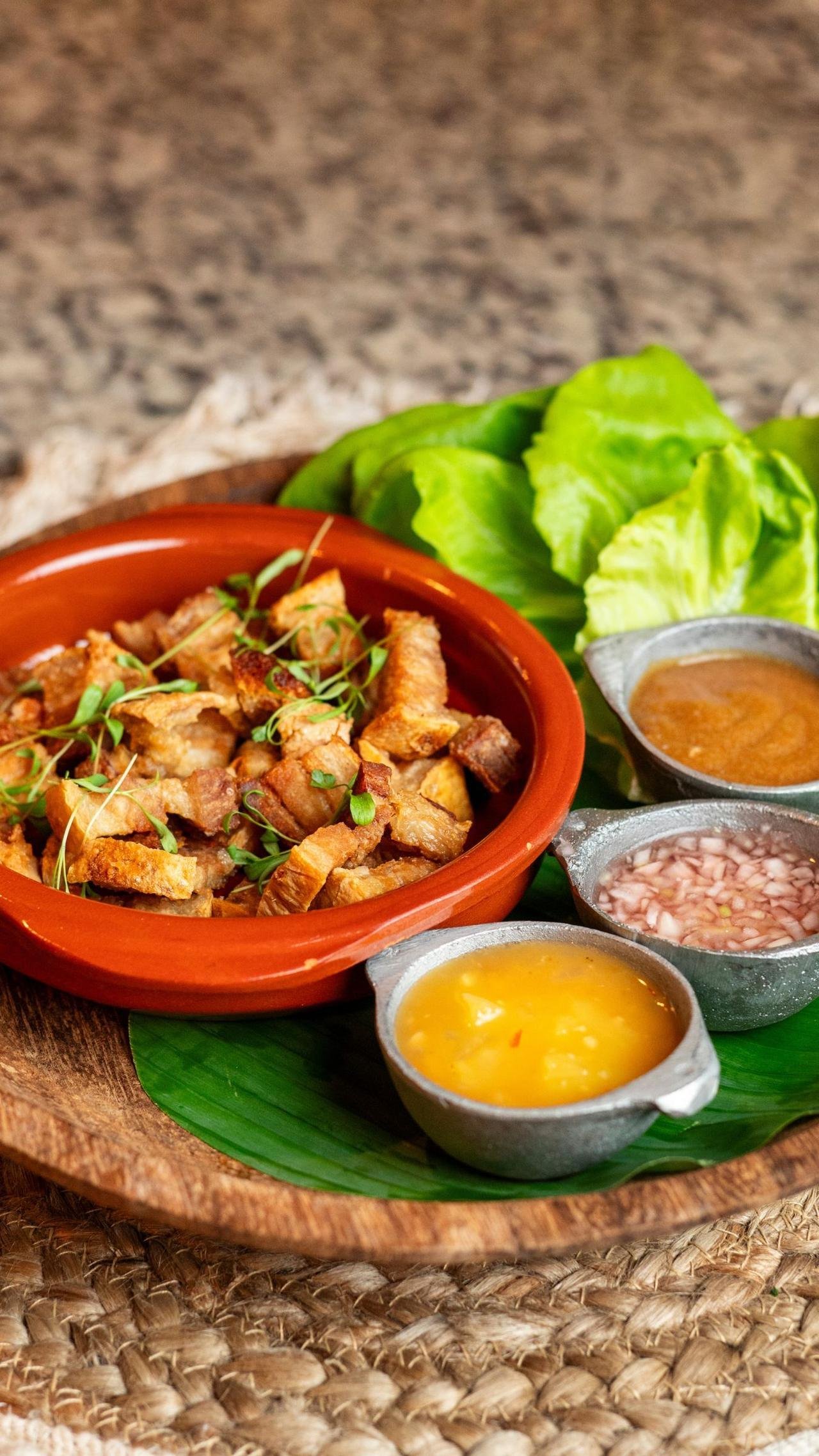
Contemporary Panamanian cuisine has understood that dishes like this do not need to be reinvented — they need to be honored with technique. In Casco Antiguo, Aya la Vida — a contemporary Panamanian restaurant working exclusively with national ingredients under the motto "De la Tierra a tu Mesa" (From the Land to Your Table) — serves its Chicharrón de Ocú ($18) as a direct tribute to Azuero: crispy pork accompanied by creole sauce, pineapple jam and ají chombo pepper.
The combination is a lesson in balance: the creole sauce brings freshness and acidity, the pineapple jam adds a tropical sweetness that embraces the pork's richness, and the ají chombo — Panama's emblematic hot pepper — wakes the whole plate up. It is the same chicharrón you would find on an Ocú roadside, tuned for a table in the historic district.
The same menu carries other nods to the country's interior, such as the Chorizo tableño de la Tía María ($10.50), a sausage from neighboring Las Tablas, and the Buñuelo de maíz como en carnavales ($11), a corn fritter that completes the Azuero journey without leaving the neighborhood. You can see all dishes and prices on our digital menu.
How to build your chicharrón route
If crispy pork is your weakness, this itinerary never fails:
- In Azuero: tour the chicharronería stands of Ocú and its surroundings, especially during festival season, when tradition takes to the streets.
- In Panama City: book at Aya la Vida in Casco Antiguo to try the chef's version with creole sauce and pineapple jam, ideally on a night with live music or folklore on the terrace.
- For contrast: cross continents on the same street and visit Restaurante Santa Rita, where Iberian charcuterie — with jamón ibérico as its flagship — and Argentine grilled cuts offer another way to celebrate pork and fire. Explore its offering on our Santa Rita page.
Reserve and celebrate Azuero in Casco Viejo
Chicharrón de Ocú is best enjoyed freshly made, with willing hands and good company. Book your table at Aya la Vida via WhatsApp at +507 6588-4855 — the restaurant is pet-friendly and offers vegetarian and gluten-free options for companions with other cravings — or write to us through our contact page to plan your visit. Azuero is a four-hour drive away, but its crispy pride is waiting for you in Casco Antiguo.