Panamanian cuisine
Panamanian Guacho: The Creamy Rice That Tastes Like Home
Panamanian guacho is the country's most beloved creamy rice: its farmhouse origins, the secret of concolón, and where to try a memorable seafood guacho.
Published on April 8, 2026 · 4 min read
If one dish smells like a grandmother's kitchen in Panama, it is guacho. This creamy rice, simmered until the grain embraces the broth, is the Panamanian guacho of a lifetime: wood-fire food, rainy-day food, family-gathered-around-the-pot food. Today it is also one of the flags of contemporary Panamanian cuisine — and here is why.
What exactly is guacho?
Guacho is a brothy rice — neither soup nor risotto, but something entirely Panamanian — cooked with more water than usual so that the grain's starch thickens the broth into a creamy, enveloping texture. Its name, according to scholars of Panamanian speech, evokes the humble and the homemade, and that is precisely its essence: it was born as a thrift dish in the countryside, where one hen, a piece of smoked pork tail or a handful of beans could feed the whole house if stretched with rice and good broth.
Every region has its own. In the central provinces, guacho de rabito (with smoked pork tail) and guacho de frijoles chiricanos (with Chiricano beans) rule; on the coasts, the sea takes over and the rice is cooked with fish, shrimp, clams or crab. What never changes is the ritual: low heat, a wooden spoon and patience.
For anyone wondering how it differs from risotto, the answer is simple: guacho does not chase butter or cheese but the backbone of a creole broth; it is not stirred obsessively but left to do its work; and its luxury lies not in an expensive ingredient but in the time invested.
The best-kept secret: the concolón
Every serious guacho hides a treasure at the bottom of the pot: the concolón, the layer of toasted, golden rice that forms against the metal. In many Panamanian families the concolón is handed out as a prize; in others, the first one into the kitchen claims it. It is the isthmus's answer to the Valencian socarrat or the Caribbean pegao, and no guacho is complete without it.
The elements of a memorable guacho are few but non-negotiable:
- A broth with backbone: hen, smoked pork or seafood, cooked without haste.
- Creole culantro: the herb that perfumes all of Panama's spoon food.
- The creamy point: the rice should flow on the plate, never dry, never soupy.
- The concolón: the crunchy reward at the bottom of the pot.
- Peppers and backyard vegetables: ají dulce, onion, garlic and, depending on the region, ñame or otoe root.
Seafood guacho: the coast in a pot
Of all the versions, seafood guacho may be the most celebrated. On Panama's coasts it is cooked with the day's catch and, in Afro-Caribbean communities, with coconut milk, which lends a silky sweetness to the broth. It is a Sunday dish, a celebration dish, a "stay for lunch" dish.
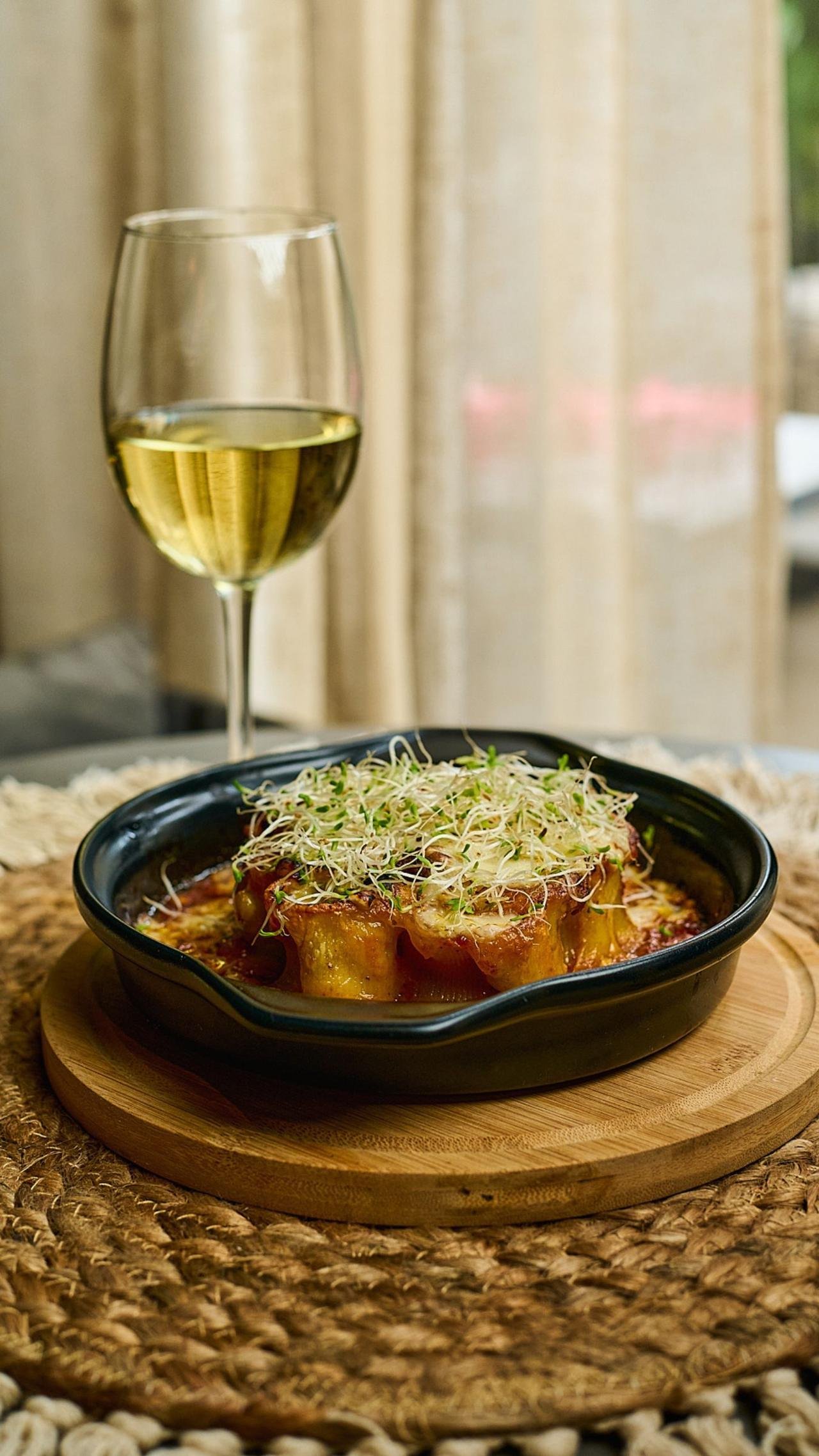
In Casco Antiguo, Aya la Vida — a contemporary Panamanian restaurant using 100% national ingredients under the philosophy "De la Tierra a tu Mesa" (From the Land to Your Table) — pays it the most direct tribute possible: its Guacho de mariscos de mi abuela ("my grandmother's seafood guacho," $21) is cooked with coconut milk and served with the concolón included, so no one has to fight over it. The name is no accident: it is a recipe that honors memory before fashion.
And for those who love creamy rice but want a different journey, the same menu offers the Arroz meloso que sabe a sancocho ($15.50), which translates Panama's national broth — hen, ñame, culantro — into the creamy language of guacho. Two dishes that confirm that in Panama, rice does not play a supporting role: it stars.
Where to try it done right
Homemade guacho is hard to beat, but when a restaurant treats it with respect, the result is moving. At Aya la Vida, the creamy rice is served in a setting that does it justice: a Casco Antiguo townhouse with a terrace, live music and folklore nights, a pet-friendly atmosphere, and vegetarian and gluten-free options on the menu. You can check current dishes and prices on the digital menu.
If your table is split between creole and international cravings, the neighborhood offers the perfect complement: Restaurante Santa Rita, with its Spanish and Argentine gastronomy — signature tapas, jamón ibérico, grilled cuts and wines from both shores — is just steps away and rounds out any food-focused weekend in the historic district.
Reserve your spoonful of memory
Guacho cannot be rushed and does not reheat well: it is enjoyed freshly made, with the concolón still crunchy. Book your table at Aya la Vida via WhatsApp at +507 6588-4855 or leave us your details on our contact page and we will help you plan your visit. There are few better ways to get to know Panama than a shared pot of guacho.